
Architext | Spring | 2026
This Issue:
-
- Spring Lecture 2026
- Conference, Expo and Awards 2026
- Member Projects & Articles
- Connections Under Construction
- Government Affairs
- Call for Member Articles
- Membership Notes
- Upcoming Events
- Job Opportunities
-
Thanks to Our Generous Newsletter Sponsors



-
Spring Lecture
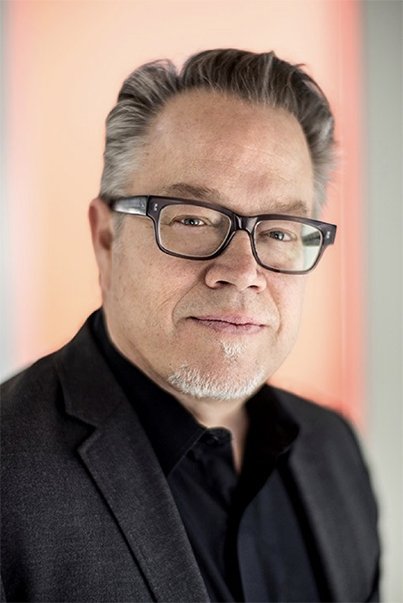
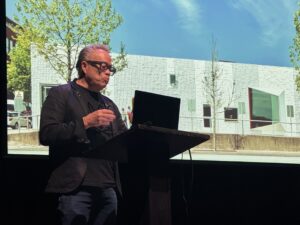
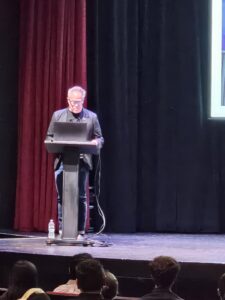
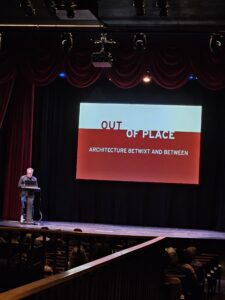
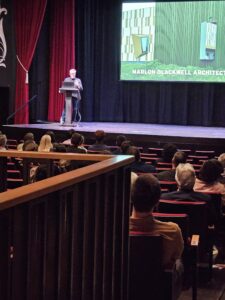
Marlon Blackwell, FAIA, presented Out of Place: Architecture Betwixt and Between on May 20 for the 2026 AIA Central PA Spring Lecture at New Cumberland’s West Shore Theatre. Marlon first spoke to AIA Central PA in 2006 and returned as the recipient of the 2020 AIA Gold Medal, bringing with him a new monograph (Radical Practice), the 2025 Mies Crown Hall Americas Prize, the 2016 Cooper Hewitt National Design Award in Architecture, and more than 200 design awards.
Marlon is, quite simply, one of the most influential architects practicing today. His commitment to delivering architecture of the highest caliber regardless of budget or program is increasingly rare and deeply inspiring. Pair that with an unmatched generosity of spirit, and you have not only a great architect but a great human being.
The presentation highlighted his firm’s commitment to crafting bold architecture that is firmly rooted in place while meeting the needs not only of clients but also of the broader communities in which the buildings are located. Through projects such as St. Nicholas Eastern Orthodox Church in Springdale, Arkansas (2010) AIA’s National Design Award-winning project with the lowest cost per square foot at the time; Shelby Farms Park in Memphis (2016) which transformed a former penal farm into the city’s premier outdoor recreation space accessible to all socioeconomic groups; Marygrove Early Learning Center in Detroit (2021) supporting The Kresge Foundation’s commitment to lifelong learning in an underserved community; and The Thaden School in Bentonville, Arkansas (2020) where tuition is based on a family’s means and students learn through a project-based curriculum centered on meals, wheels, and reels (food, biking, and storytelling) he demonstrated how design can reinvent a place while preserving its unique character.
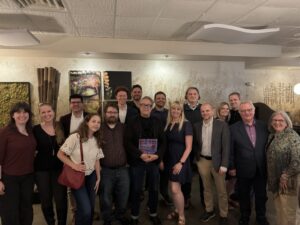
The social time before and after the lecture provided a welcome opportunity not only to reconnect with colleagues but also to engage more personally with the speaker.
Thank you to all our sponsors—15 organizations made the lecture possible—and to all who attended. We had one of our strongest turnouts yet!

Conference, Expo and Awards | Save the Date
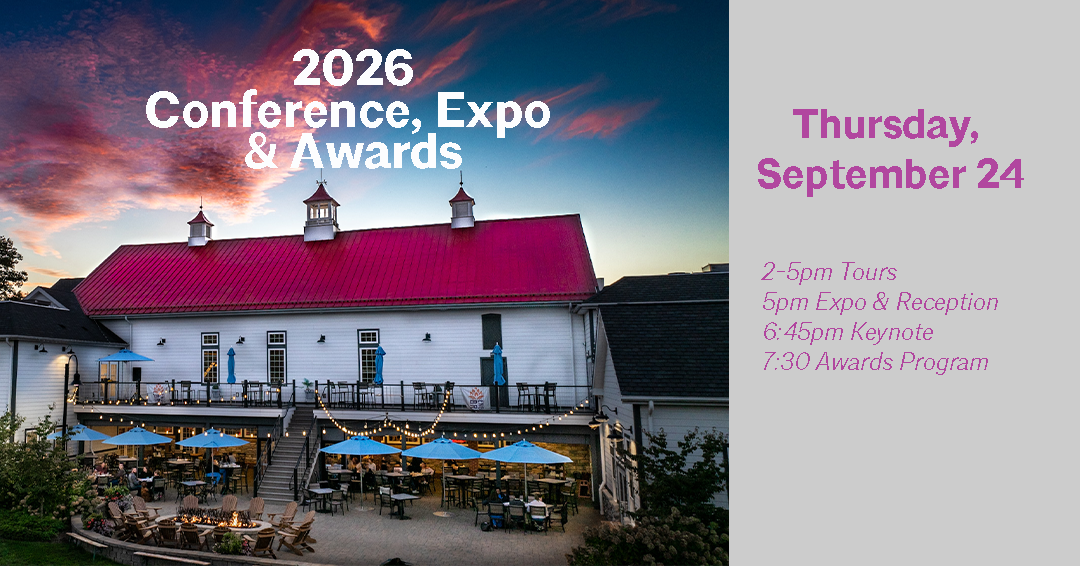
AIA Central Pennsylvania members will be gathering in person on Thursday, September 24th to celebrate design excellence, this time in the city of Hershey, PA. The day will offer two architectural building tours, details still to be determined, a vendor exhibition and happy hour, followed by a keynote speaker, and finally ending the night with the Excellence in Design Award reveal. The 2026 conference location is The Englewood, 1219 West End Ave., Hummelstown, PA 17036
The 2026 Design Awards Schedule will be as follows:
- Submissions Open | June 3, 2026
- Submissions Close | July 15, 2026
- Members Choice | Voting open August 3, 2026 – August 24, 2026
- Young Architect Award
- Distinguished Service Award
Help us celebrate the extraordinary members that we have in Central Pennsylvania. Create a submission for one of our annual special awards. Nominations open June 3rd and close Aug 30, 2026.
Member Projects & Articles
MetLife Arena Pedestrian Bridge | by Austin Benham
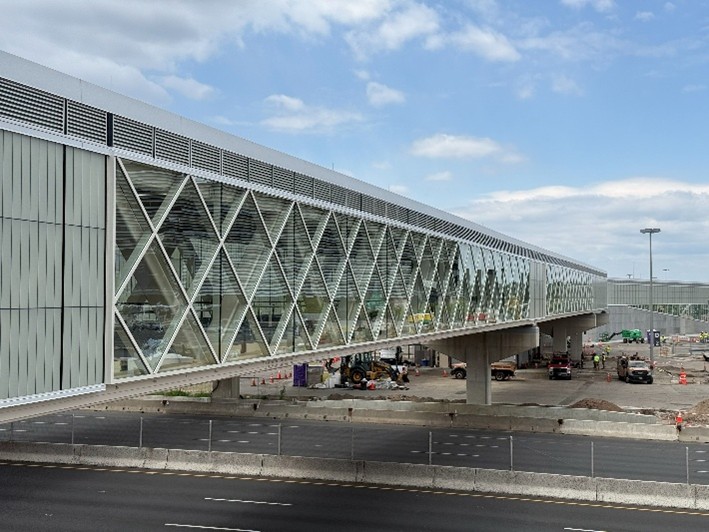
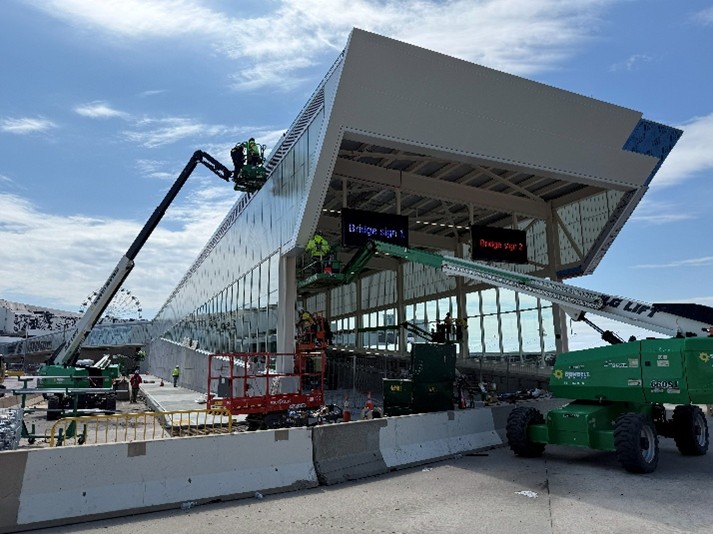
GFT recently completed work on the site of the MetLife Arena in New Jersey for a new pedestrian bridge linking the American Dream Mall with the sports complex in anticipation of the 2026 World Cup later this year. The objective of this project was to design and construct an additional pedestrian bridge, along with elevated platforms and an enclosed ramp, to supplement and expand the capacity of the existing overpass structure at MetLife Stadium. This proposal specifically addresses the goal of significantly enhancing the fan experience by alleviating congestion and improving crowd flow between the stadium and the American Dream parking garage.
The architectural scope of work includes the design of the pedestrian walkway with vision-glass for views in and out, for passive-security and for comfort, which also allow for views of MetLife Stadium, parking areas, and Route 120. Additionally, the translucent wall system on the walkway’s South Elevation allows for daylighting and solar heat gain reduction. Passive ventilation design was also used via high louvers and low louvers to remove excess heat. Overall, the design enhances the exterior built environment and bridge user experience.
Planning to Lead: Achieving Project Success with Effective Planning and Scheduling
Tara Labosky, AIA, LEED AP, CCCA
Owner/Principal
Luzerne Consulting, LLC
Effective project planning and scheduling play a critical role in determining the overall success of a project. In the context of design and construction projects, these processes extend far beyond the creation of milestone dates or the assignment of optimistic durations. Comprehensive planning involves defining and sequencing all required tasks, establishing realistic timeframes, and employing work breakdown structures to clarify how different tasks are interdependent.
Architects can improve their planning and scheduling strategies by understanding the proven approaches contractors use to deliver successful projects.
It’s important to understand the distinction between planning and scheduling, and that scheduling cannot be accomplished effectively without robust planning. The primary objective is to develop a realistic and workable program that avoids wishful thinking.
Planning establishes the logic of how a project will be constructed – the how, where, and by whom – and involves all stakeholders. This process begins with a project overview and includes assembling the project team, developing a project strategy, and assessing the project’s scale, scope, and value. Additionally, risk management is a crucial component, involving ongoing identification, evaluation, and management of project risks.
Scheduling integrates the plan with a calendar or specific time frame – the when – and typically involves one individual. This process includes establishing key dates for activities and events, assigning credible durations to each task, establishing logical relationships between tasks, and ordering them into a coherent and logical sequence, known as the baseline schedule.
Several methods can be used to develop schedules. The Program Evaluation Review Technique, or PERT calculates the mean value of an activity duration using the most optimistic activity duration, the most likely duration, and the most pessimistic estimates. The work breakdown structure (WBS) helps define major schedule components and organizes them into a detailed presentation, breaking down subsystems until manageable work packages are established. The precedence diagram method takes project activities, durations, and predecessor relationships and creates a logical graphic representation to determine overall project duration, earliest start and finish of activities, latest start and finish of activities, and activity float.
When developing a baseline schedule, it is important to consider constraints which may be physical, financial, managerial, staffing, or regulatory. Excessive constraints can reduce scheduling flexibility, lengthen project duration, and increase costs. The management of resources is also critical, with personnel being the most important resource. Not only must staff be available, but having the best-qualified staff can determine the success or failure of a project.
Once the baseline schedule is completed, it must be administered to ensure awareness of time-related contract provisions such as defining delays that qualify for extensions, performing earned value analysis, and implementing strategies for schedule recovery when necessary. Tracking the schedule also helps evaluate influencing factors, including the allocation and leveling of resources, and tracking impacts to productivity such as overtime, rework, delays, acceleration, and crowding.
The construction industry has refined the art of planning and scheduling, and architects can greatly benefit from studying and adopting these proven methodologies. This involves not just understanding the distinction between planning and scheduling, but also clarifying the rationale – or the ‘why’ – behind each step in the process.
RLPS Writes White Papers on Senior Living Design
RLPS recently released three white papers focused on key trends and strategies in senior living design. These resources provide valuable insights and data on topics including the development of resident selection packages, evaluating growth potential, and optimizing food service design. As the aging population continues to expand, these white papers offer timely guidance to architects, planners, and owners seeking to create successful, resident-centered senior living communities.
- Food Service Design Lessons from the Field: What Life Plan Communities Should Know
- The Growth Imerative: 5 Key Factors for Navigating Risk, Readiness and Reward
- How to Structure Residence Selection Packages for Independent Living Expansions
TONO 25th Anniversary
TONO Group Marks 25 Years of Growth with Community-Focused
Anniversary Event in Lancaster
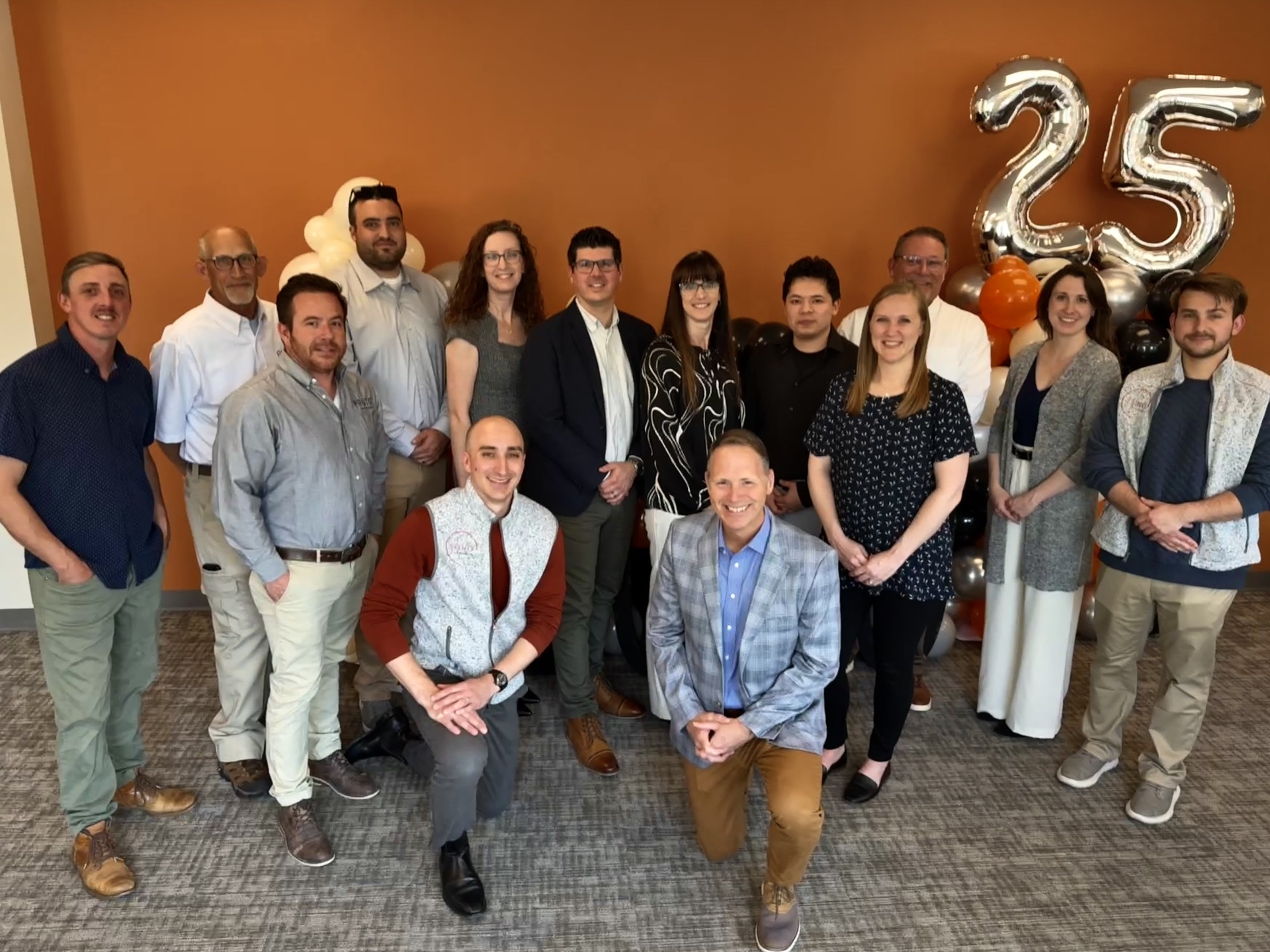
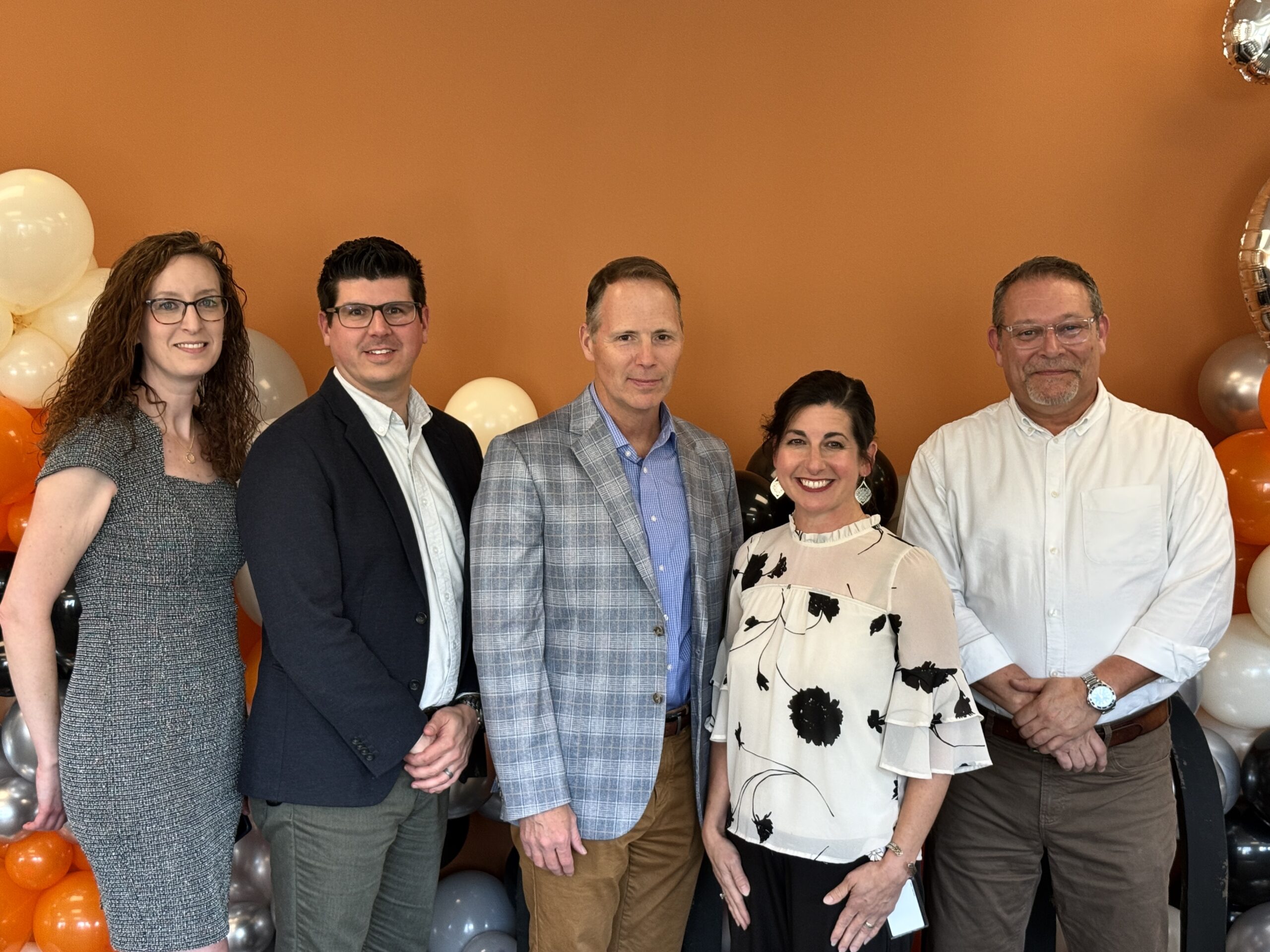
Lancaster, PA // May 2026 — TONO Group, a Lancaster-based multidisciplinary architecture, design, and construction firm, celebrated its 25th anniversary with a community-focused give-back event and open house at CrossNet Ministries on Thursday, May
7. The event highlighted both the firm’s regional impact and its continued investment in Central Pennsylvania’s economic and community development.
The anniversary celebration brought together clients, partners, and community members for a tour of CrossNet Ministries, a large-scale project designed and built by TONO Group to support expanded services for individuals and families across Lancaster
County. The warehouse spans an entire city block and was thoughtfully designed to function as a welcoming, efficient hub for community services, including food distribution, youth programming, and support resources.
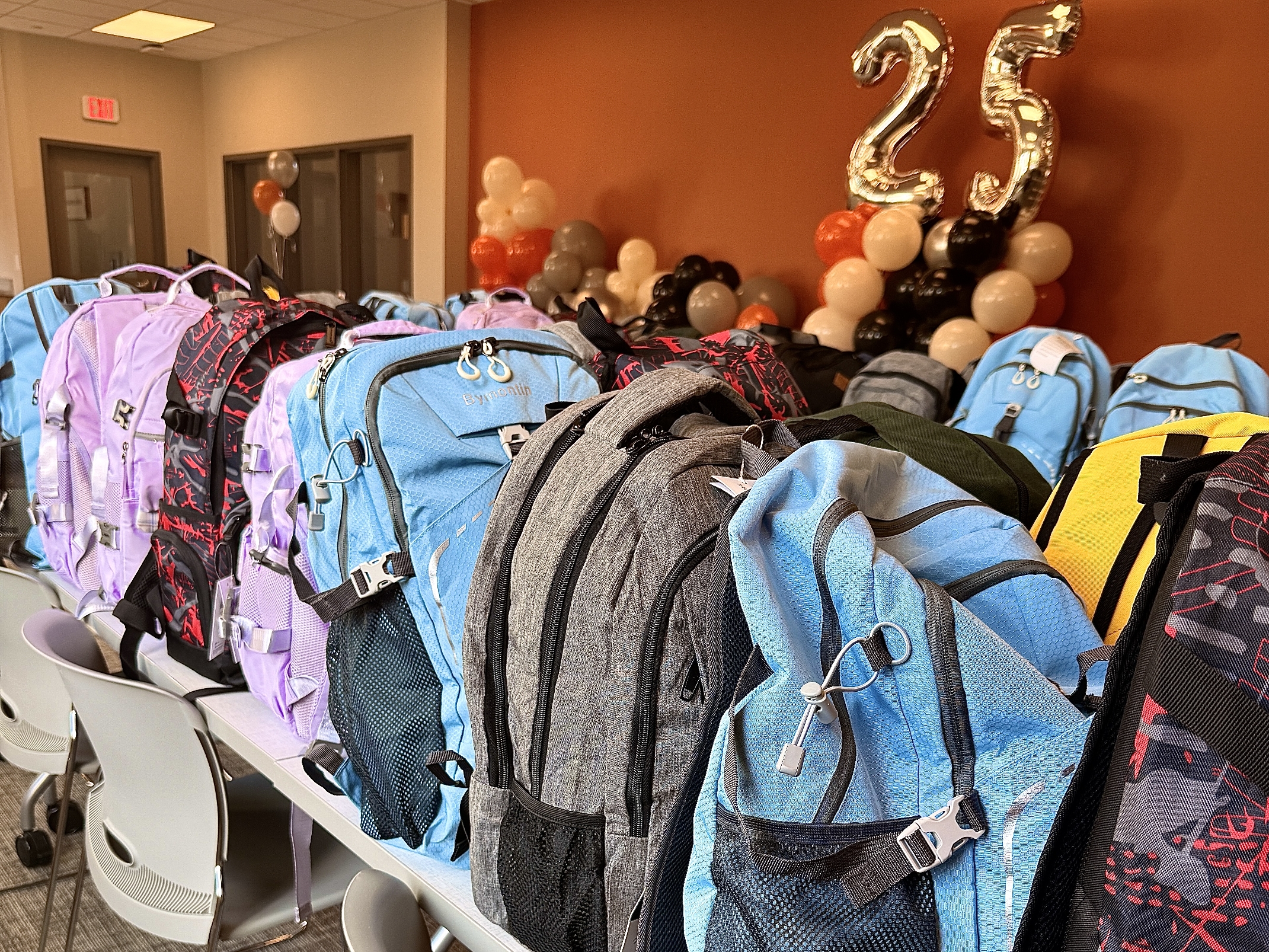
In addition to drawing awareness to CrossNet by holding the event at its facility, TONO worked to double its impact through a “Stuff This Backpack” supply drive. Leading up to the event, TONO gave the companies and individuals on their invitation list the
opportunity to participate in the drive. TONO delivered new, empty backpacks to attendees who then encouraged their employees to fill the backpack with food, clothing, personal care and household items. Attendees then brought the full backpacks with them to the
event, handing them over to CrossNet who will distribute them to children in need in Lancaster County.
The response was overwhelming. The event brought more than 50 full backpacks plus several hundred additional donations including canned food, diapers and cleaning supplies. CrossNet Ministries Executive Director Allison Cuthie said the donations will have meaningful impact on children in the community who participate in their annual backpack giveaway. “It’s a special day to help kids who are excited about going back to school but wouldn’t have had the opportunity to show up with a new backpack just like every other kid arriving at school that day,” said Cuthie. “The ability to support them is directly related to TONO’s gift and the community’s participation. We are just so grateful.”
Evolution to a Fully Integrated Firm
Founded in 2001 in Lancaster, TONO Group has evolved into a fully integrated firm offering architecture, construction, interior design, and development services. From community-focused nonprofits to commercial and residential projects across Central Pennsylvania and the
broader mid-Atlantic region, TONO’s work reflects a strong connection to the region’s growth and a reputation for collaborative, people-centered design.
“This milestone is an opportunity to reflect on the incredible journey we’ve been on the past 25 years,” said Hunter Johnson, AIA, founder and CEO of TONO Group. “We’re deeply grateful for the clients, partners, and communities especially here in Central Pennsylvania
who have trusted us to help bring their visions to life. Together, we’ve built more than structures—we’ve built lasting relationships and spaces that truly matter.”
TONO’s integrated model has positioned the firm to respond to increasing demand for streamlined project delivery and cohesive development strategies, an approach that continues to gain traction among both private and nonprofit clients. The CrossNet Ministries project exemplifies this model, combining design, construction, and mission alignment to deliver long-term value for the organization and the surrounding community. The facility was developed through close collaboration with CrossNet’s leadership to ensure the building supports the organization’s day-to-day operations and long-term mission.
Looking Ahead to Another 25
TONO Group sees continued opportunity to expand its impact both locally and in new markets, while staying grounded in the values that have defined its first 25 years. “As we look to the next 25 years, we’re energized by the possibilities ahead,” said Sharlee Van Tine, AIA, LEED AP, managing director/architect at TONO Group. “We’re proud of the work we’ve done across Pennsylvania, and we’re excited to continue growing our reach while staying true to our roots—delivering thoughtful, innovative design that supports thriving communities.” The anniversary event served as both a celebration of TONO Group’s legacy and a call to action demonstrating how design and development can serve as catalysts for both economic progress and social impact in Central PA.
About TONO Group
TONO Group redefines the building process by providing a seamless, single-source experience for commercial and residential clients. From its offices in downtown Lancaster and West Chester, Pennsylvania, TONO Group maintains a clear mission to create meaningful places and
improve the quality of the built environment. Respecting architecture as a singular endeavor, the team’s tailored and integrated project delivery process has produced exceptional spaces nationwide. Five distinct businesses fall under the TONO Group umbrella, each dedicated
to a core component of the construction process: TONO Architects, PROTO Construction, Interiors by DECO, RETRO Development and RELO Real Estate Services. For more information about TONO Group and its team and portfolio, visit www.tonogroup.com.
Connections Under Construction What is It??
Emerging Professionals & AIA CP Community,
Connections Under Construction is a monthly recurring networking and professional development series designed to bring together AIA Central Pennsylvania members at every stage of their careers. The program alternates monthly between casual in-person happy hours and engaging virtual lunch-and-learn sessions, creating opportunities to connect, learn, and strengthen our architectural community.
Whether you’re an emerging professional looking to expand your network or an experienced architect eager to share insights and mentor the next generation, Connections Under Construction offers a welcoming environment to build meaningful relationships and exchange ideas.
Why Attend?
- Connect with emerging professionals, young architects, and experienced practitioners from across Central Pennsylvania.
- Expand your professional network and discover new opportunities for collaboration.
- Share experiences, challenges, and lessons learned with peers.
- Build relationships that support personal and professional growth.
- Help strengthen and grow the architectural community in Central Pennsylvania.
What to Expect
In-Person Networking Events
- Informal networking in a relaxed setting
- Light refreshments and beverages
- Conversation starters and structured networking activities
- Opportunities to connect with professionals from a variety of firms, disciplines, and backgrounds
Virtual Lunch & Learn Sessions
- Timely discussions on professional practice, leadership, advocacy, licensure, and emerging industry trends
- Interactive conversations with industry experts and peers
- Practical insights and resources to support your career development
Whether you join us in person or online, Connections Under Construction is your opportunity to engage with colleagues, gain new perspectives, and help build the future of the profession—one connection at a time.
Government Affairs Update
Bipartisan housing bill advances in Congress
The House took a major step forward on housing policy, passing the 21st Century Road to Housing Act by a bipartisan vote of 396–13. The legislation includes several long-standing AIA priorities, including expanded Community Development Block Grant flexibility, streamlined environmental reviews, and increased FHA multifamily loan limits to support housing production.
The bill also directs a review of Build America, Buy America (BABA) waiver processes that have created challenges for affordable housing projects. AIA members sent more than 1,000 letters to Congress supporting the legislation. The Senate is expected to consider next steps in the coming months. Read more in the advocacy update shared on Component Connect.
AIA joins coalition in White House legal challenge
AIA joined 10 preservation and planning organizations in filing an amicus brief supporting a legal challenge related to the proposed demolition of the White House East Wing and construction of a new ballroom on White House grounds. The brief argues that major construction on federal national park land requires congressional authorization and compliance with existing federal preservation laws. For additional context, review the AIA press release and FAQ.
Call for Member Articles | Share Your Perspective
AIA Central Pennsylvania is seeking article and website post contributions for publication in our quarterly newsletter and on our website. This is an excellent opportunity to showcase your expertise, share innovative ideas, and contribute to the ongoing professional development of architects and design professionals throughout Central Pennsylvania.
We welcome a variety of content, including:
- Thought leadership and industry trends
- Project case studies and recently completed work
- Lessons learned and best practices
- Insights from conferences, seminars, and professional events
- Emerging technologies, materials, and design strategies
Whether you have a full-length article or a brief project update, we encourage you to share your knowledge and experiences with your peers.
To discuss a topic or submit a contribution, please contact Chloe Chapman, AIA PA Communications Chair chloescottage@gmail.com. Your perspective can help inform, inspire, and strengthen our professional community.
Membership Notes
Upcoming Events
REGISTER FOR UPCOMING AIA CENTRAL PA EVENTS
REGISTER FOR UPCOMING AIA PA EVENTS.
Job Opportunities
Strasburg seeks historic district residents to serve on board protecting architectural heritage | More Information
View the latest positions posted to our job board!
Hiring? Submit your position HERE
